Posts Tagged ‘AI Automation’

How Can an AI Email Assistant Save Hours Every Week?

Thursday, June 18th, 2026

Running a business often means managing an endless stream of emails. Customer inquiries, appointment requests, vendor communications, internal updates, follow-ups, and support tickets can quickly overwhelm even the most organized team. For many small and mid-sized businesses, email management has become one of the biggest productivity challenges.

If you find yourself spending several hours each day sorting, reading, and responding to emails, you’re not alone. Business owners across Las Vegas, Henderson, and Nevada are looking for smarter ways to handle communication without hiring additional administrative staff.

This is where an AI email assistant can make a significant difference.

An AI email assistant helps businesses automate repetitive email tasks, organize inboxes, prioritize important messages, generate responses, and streamline communication workflows. As a result, teams can save valuable time every week while improving customer service and operational efficiency.

In this guide, we’ll explore how an AI email assistant works, how it saves hours every week, and why more businesses are investing in AI business automation solutions.

What Is an AI Email Assistant?

An AI email assistant is an intelligent software solution that helps businesses manage emails more efficiently. Instead of manually sorting through hundreds of messages, AI can analyze incoming emails, identify priorities, draft responses, automate follow-ups, and organize conversations automatically.

Unlike traditional inbox filters, modern AI email management tools learn from communication patterns and continuously improve their performance over time.

An AI email assistant can:

  • Organize incoming emails automatically
  • Prioritize urgent messages
  • Draft professional responses
  • Automate follow-up emails
  • Schedule meetings
  • Reduce inbox clutter
  • Improve response times
  • Support customer communication workflows

As a result, employees spend less time managing email and more time focusing on revenue-generating activities.

The Hidden Cost of Managing Business Emails

Many business owners underestimate how much time email consumes.

Every email requires attention. Employees must read messages, determine priority levels, respond appropriately, file conversations, and often follow up later. While each task seems small, the cumulative effect can be substantial.

For businesses in industries such as real estate, healthcare, accounting, mortgage lending, and property management, email communication is often a critical part of daily operations.

Consider a typical workday:

  • New customer inquiries arrive throughout the day
  • Existing clients request updates
  • Vendors send important communications
  • Team members exchange project information
  • Prospects require follow-up emails

Without automation, these tasks can consume several hours each week.

More importantly, constant email interruptions reduce focus and productivity. Employees frequently switch between tasks, leading to slower workflows and missed opportunities.

This is one reason why AI workflow automation is becoming a priority for growing businesses.

How Can an AI Email Assistant Save Hours Every Week?

The biggest advantage of an AI email assistant is its ability to automate repetitive administrative tasks.

Let’s look at the most impactful ways AI email automation saves time.

1. Automatically Organizes Your Inbox

Sorting emails manually may not seem time-consuming, but it adds up quickly.

An AI email assistant can automatically categorize messages based on content, sender, urgency, or department. Customer inquiries, billing questions, support requests, and internal communications are organized instantly.

As a result, employees no longer waste time searching for important messages.

2. Prioritizes Important Emails

Not every email deserves immediate attention.

AI can identify urgent requests and move them to the top of the inbox. This ensures that critical customer inquiries, sales opportunities, and high-priority communications receive prompt responses.

Consequently, businesses improve response times without constantly monitoring inboxes.

3. Generates Professional Email Drafts

Writing repetitive emails consumes a surprising amount of time.

Many businesses send similar responses every day, including:

  • Appointment confirmations
  • Service inquiries
  • Pricing requests
  • Meeting follow-ups
  • Customer support responses

An AI email assistant can generate accurate draft responses within seconds.

Employees can review, personalize, and send the message instead of writing it from scratch.

This alone can save several hours every week.

4. Automates Follow-Up Emails

Following up consistently is essential for sales and customer service.

However, many businesses struggle because manual follow-ups are easy to forget.

AI email automation can automatically schedule and send follow-up messages based on specific triggers and timelines.

For example:

  • Follow up with a lead after three days
  • Send appointment reminders automatically
  • Request customer feedback after service completion
  • Re-engage inactive prospects

This improves communication while reducing manual workload.

5. Speeds Up Customer Response Times

Customers expect quick responses.

When emails sit unanswered for hours or days, businesses risk losing opportunities and damaging customer relationships.

AI email management tools help businesses respond faster by:

  • Prioritizing inquiries
  • Suggesting responses
  • Routing emails to the correct team member
  • Automating common replies

As a result, customers receive timely responses while employees spend less time managing inboxes.

6. Simplifies Scheduling

Scheduling meetings often involves multiple emails.

Employees must check calendars, suggest times, confirm availability, and send reminders.

An AI email assistant can automate much of this process.

Instead of exchanging several emails, AI can identify available time slots, coordinate schedules, and send confirmations automatically.

This reduces administrative work and improves efficiency.

7. Eliminates Repetitive Administrative Tasks

Many businesses lose productivity because employees repeatedly perform low-value tasks.

Examples include:

  • Filing emails
  • Updating records
  • Forwarding inquiries
  • Sending reminders
  • Tracking responses

AI business automation reduces these repetitive activities and allows employees to focus on more strategic work.

How Different Industries Benefit from AI Email Automation

While almost every business can benefit from email automation, certain industries see especially strong results.

Real Estate Agencies

Real estate professionals handle a large volume of inquiries every day.

An AI email assistant can:

  • Respond to property inquiries
  • Schedule showings
  • Follow up with leads
  • Organize buyer and seller communications

This helps agents focus on closing deals rather than managing inboxes.

Mortgage Companies and Lenders

Mortgage professionals often manage extensive client communication throughout the loan process.

AI can automate:

  • Document requests
  • Status updates
  • Appointment scheduling
  • Client follow-ups

As a result, loan officers can spend more time serving clients.

Healthcare Providers

Healthcare offices receive appointment requests, patient questions, insurance inquiries, and administrative communications daily.

AI email automation helps healthcare providers improve communication while reducing administrative burdens.

Accounting and CPA Firms

Accounting firms experience significant email volume, especially during tax season.

AI can streamline:

  • Client communications
  • Document requests
  • Appointment reminders
  • Status updates

This allows accountants to focus on higher-value client work.

Property Management Companies

Property managers constantly communicate with tenants, vendors, contractors, and property owners.

An AI email assistant helps automate:

  • Maintenance requests
  • Tenant communications
  • Lease inquiries
  • Vendor coordination

As a result, property management teams can operate more efficiently.

How Many Hours Can Businesses Actually Save?

The exact time savings vary based on company size and email volume.

However, many businesses can reduce email-related administrative work significantly.

Task Manual Time Per Week With AI Automation
Email Sorting 2-3 Hours Minutes
Follow-Ups 2 Hours Automated
Draft Responses 3-5 Hours Less Than 1 Hour
Scheduling 1-2 Hours Automated
Inbox Organization 1 Hour Automated

For many organizations, this translates into 8 to 15+ hours saved every week.

Over a year, that can mean hundreds of productive hours returned to the business.

Why Las Vegas and Henderson Businesses Are Adopting AI Faster

Small and mid-sized businesses in Las Vegas, Henderson, and throughout Nevada face increasing pressure to operate efficiently.

Competition continues to grow across industries, while labor costs and administrative demands continue to rise.

Many businesses are looking for ways to scale operations without significantly increasing payroll expenses.

This is one reason AI for business has become such a valuable investment.

Rather than hiring additional administrative staff to manage growing communication workloads, companies are implementing AI productivity tools that automate routine tasks and improve operational efficiency.

As a result, businesses can grow while maintaining lean and efficient teams.

How to Choose the Best AI Email Assistant for Your Business

Not all solutions offer the same capabilities.

When evaluating an AI email assistant for small business operations, look for features such as:

  • Gmail integration
  • Microsoft Outlook integration
  • AI-generated email drafts
  • Automated follow-up workflows
  • CRM integration
  • Customer support automation
  • Smart inbox organization
  • Calendar scheduling
  • Workflow automation tools
  • Enterprise-grade security

The right solution should align with your business processes and communication needs.

How Cevra AI Helps Businesses Automate Email Management

At Cevra AI, we help businesses reduce administrative workloads through practical AI automation solutions.

Our AI email assistant services are designed to help organizations:

  • Automate inbox management
  • Improve customer communication
  • Reduce repetitive email tasks
  • Increase employee productivity
  • Streamline follow-ups
  • Enhance operational efficiency
  • Implement customized AI workflows

Whether you operate a real estate agency, mortgage company, healthcare practice, accounting firm, or property management company, AI-powered email automation can help your team save time and focus on higher-value work.

Businesses across Las Vegas, Henderson, and Nevada are increasingly adopting AI automation to remain competitive, improve service quality, and create more efficient operations.

Final Thoughts

Email remains one of the largest productivity drains for modern businesses. However, it doesn’t have to be.

An AI email assistant can automate inbox organization, prioritize important messages, draft responses, schedule follow-ups, and eliminate repetitive administrative work.

The result is simple: more productivity, faster customer communication, and significant time savings every week.

For many businesses, implementing AI email automation can save between 8 and 15 hours weekly while improving customer experience and operational efficiency.

As AI technology continues to evolve, businesses that embrace intelligent automation today will be better positioned for long-term growth and success.
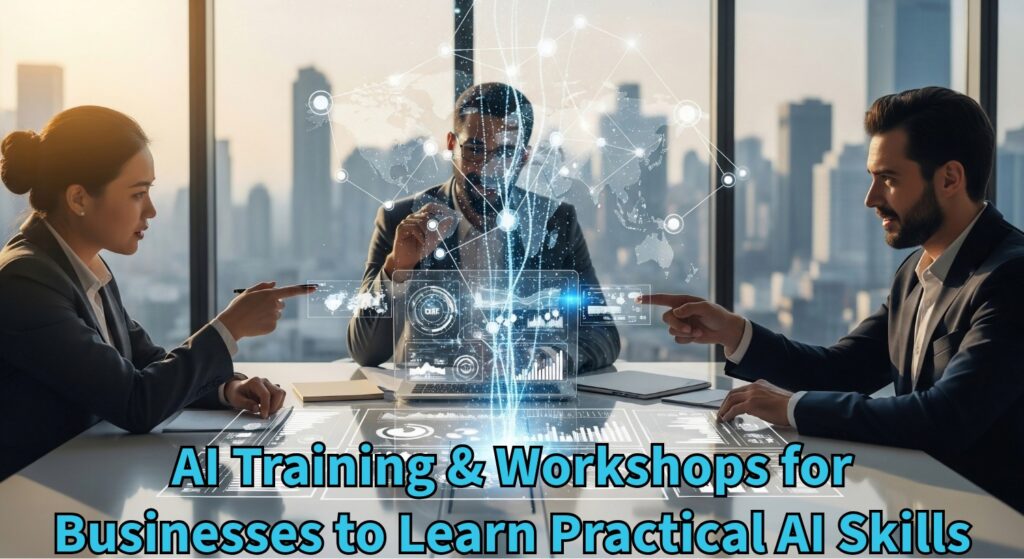
AI Training and Workshops for Businesses to Learn Practical AI Skills

Friday, March 13th, 2026

AI training and workshops for businesses learning AI tools automation and AI consulting

Artificial intelligence is reshaping how businesses operate in today’s fast-evolving landscape. Through practical AI Training and Workshop organizations equip their teams to use AI tools effectively, automate workflows, and make smarter, faster decisions that drive measurable business results.

While AI tools like ChatGPT and machine learning platforms are widely available, many teams struggle to apply them effectively. Employees may experiment with AI or read about its potential, but without structured training, they often lack the skills and frameworks needed to turn AI into real business impact.

This is why organizations now see AI training and workshops as essential. Instead of relying on trial-and-error learning, businesses invest in training programs, workshops, and sessions that teach employees how to strategically use AI tools.

At Cevra AI, we often work with companies interested in adopting AI but unsure how to get started. Through structured AI training and workshops, teams can move beyond the hype and begin using AI to improve productivity, automate processes, and support smarter decision‑making.

In this blog, we will explore:

  • What AI training really means for businesses
  • The distinction of AI, machine learning, and generative AI.
  • What companies actually learn in AI workshops
  • Why AI workforce upskilling is becoming a business priority

Why Businesses Are Investing in AI Training and Workshops

Artificial intelligence has shifted from an experimental technology to a fundamental business competency in recent years. Organizations now use AI to assist in numerous vital activities, including:

  • Generation of marketing content.
  • Data forecasting and analysis.
  • Workflow automation
  • Enhancement of operational efficiency.

Despite these advantages, most workers have not received formal AI training and workshops. Many companies implement AI without adequately training employees, leading to underuse or misuse. Structured programs make a significant difference.

During structured training, the employees are taught how to:

  • Be conversant with AI capabilities and limits.
  • Deploy AI in business practice.
  • Design and engineer human‑centric automation processes.
  • Apply AI in a good manner.

Companies investing in corporate AI training see boosts in productivity, collaboration, and innovation. Trained teams recognize AI as a productivity partner, not a threat to human work.

What Is AI Training?

AI training refers to educational programs that help individuals and teams understand, use, and implement artificial intelligence technologies in practical ways. These programs may vary in format, but can include:

  • Artificial-intelligence coursework
  • AI workshops
  • Training in machine learning
  • ChatGPT training courses
  • Professional boot camps of AI
  • Executive AI workshops

Some programs are technical, such as coding and model building. However, most modern, business-focused programs emphasize hands-on application over theoretical principles.

For example, a well‑designed AI training and workshop for non‑tech staff might teach participants how to:

  • Research and communication with ChatGPT
  • Streamlineday-to-day administrative activities
  • Create marketing content through AI
  • Extract insights from business data using AI
  • Improve work efficiency

Our training and workshops at Cevra AI focus on applied learning, demonstrating how AI can support real tasks across various departments. We avoid complex algorithms and instead demonstrate practical uses, enabling employees in marketing, operations, customer service, and leadership to quickly embrace AI.

The Essential AI Concepts Companies Need To Know

Attendees of AI workshops or courses must understand the distinct concepts of AI, machine learning, and generative AI. Knowing the differences helps businesses choose appropriate training.

Artificial Intelligence (AI)

Artificial intelligence describes computer systems that perform functions traditionally handled by humans. These systems process data, identify patterns, and generate predictions. Businesses use AI in areas such as:

  • E-commerce recommendation engines
  • Finance fraud detection systems
  • Customer service chatbots: AI
  • Smart intelligence solutions.

These applications push companies toward AI-driven decision-making and data-based approaches. Most organizations implement AI through software platforms, often enabling employees to engage with AI even without realizing it.

Machine Learning (ML)

Machine learning is a sub-specialty of AI focused on enabling systems to learn and improve from experience rather than being programmed with fixed rules. ML systems identify patterns from large datasets and improve their predictions over time. For example, ML models can:

  • Predict customer behavior
  • Identify processes that are out of the ordinary.
  • Forecast sales trends
  • Analyze operational data

Professionals also offer machine-learning training for those who want to study model mechanics and improve their analytical skills. For technical teams like data analysts and developers, practical ML training programs prepare them to build predictive systems and smart applications.

Generative AI

Generative AI has become one of the most popular AI technologies. In contrast to traditional AI, which interprets data, generative AI systems create new material based on patterns learned from large datasets. These tools can generate:

  • Written content
  • Marketing copy
  • Code snippets
  • Product descriptions
  • Business reports
  • Images and videos

This technology has driven the popularity of ChatGPT and generative AI workshops. Businesses train teams on these tools to save time on routine tasks.

For example, a marketing team can use AI to brainstorm campaign ideas, and a customer service team can use AI to write support responses. Through AI training and workshops, employees learn to use these tools responsibly while maintaining human oversight and creativity.

Why AI Training and Workshops Is Important for Business Teams

The gap between companies that are familiar with AI and those that lag is widening as AI adoption grows. Understanding AI is not enough; organizations must invest in upskilling. This investment is significant in several ways.

Improving Team Productivity

One immediate benefit of AI training is increased productivity. Once employees learn to use AI, they automate most time-intensive tasks, including:

  • Writing routine emails
  • Summarizing documents
  • Preparing reports
  • Researching information

Teams avoid hours of manual work and instead focus on strategic tasks that require human creativity and decision-making.

​Better Business Decisions: Support

Artificial intelligence processes data rapidly, but employees must learn to interpret AI insights for strategic use. Training helps teams support smarter decisions and strengthens data-driven strategies.

​Preparing the Workforce for the Future

AI is transforming work across industries. Companies that invest in AI upskilling prepare their workforce for the future. Training equips teams to use AI systems and adapt to new technologies, continually improving workflows. Companies that prioritize AI education and innovation workshops are more likely to remain competitive in an AI-led economy.

How Cevra AI Approaches AI Training and Workshops for Businesses

At Cevra AI, we prioritize practical results over complexity in AI training and workshops. We help business teams master specific AI topics, such as improving operations. Instead of focusing on abstract concepts, our programs use:

  • Real‑world use cases
  • Hands‑on exercises
  • Practical AI tools
  • Automation strategies

Take the next step-enroll your team in this training and turn AI curiosity into tangible workplace results.

​What Happens During an AI Training and Workshop?

An organized AI workshop helps participants move from awareness to practical application. The workshop demonstrates how AI can improve everyday work, instead of bombarding the audience with theory. Most workshops involve real-world projects and immerse participants in a mix of learning styles.​

Interactive Learning Sessions

The workshop usually starts with guided sessions that explain how AI technologies apply to the business environment. Participants learn to:

  • How AI systems operate
  • The analysis of data with machine learning models
  • The way generative AI tools are created
  • Digital transformation with the help of AI

Such sessions provide the groundwork for subsequent practical applications.

​Hands‑On AI Tool Training

One of the most valuable aspects of AI training and workshops is hands-on practice. Participants do not simply listen to lectures; they engage in practical work with AI tools and learn how to use them in real life. For example, a course might include exercises where participants:

  • AI-generated marketing content
  • Fully automate administrative functions.
  • Process customer reviews using AI technology.
  • Construct basic automation processes.

This practical method will give employees the confidence to use AI.

​Real Business Use Cases

Another key component of applied AI workshops is learning through real‑world examples. Participants examine case studies to understand how companies use AI to enhance operations. These examples assist the teams in realizing:

  • The AI productivity improvement
  • How AI offers the best ROI
  • The integration of AI into the current working processes

Through these cases, people observe the potential of AI in addressing issues in their respective companies.

Artificial Intelligence (AI) Tools Every Business Team Should Learn

One of the aims of our training is to make teams familiar with the AI tools transforming modern workplaces. Most of these tools require little or no technical expertise and can be used by employees across departments. As part of our AI Consulting & Automation approach, we also guide organizations on how to integrate these tools into real workflows and business processes. The following are the most useful AI tools discussed during workshops.

​Generative AI Tools

Generative AI devices are common nowadays. They are used to create content in businesses fast and effectively. Generative AI can be used by teams to generate:

  • Marketing copy
  • Blog content
  • Customer communication
  • Product descriptions
  • Internal reports

ChatGPT training teaches employees how to write prompts that generate valuable, accurate results.

Automation Platforms

Businesses can also use automation tools to bridge disparate software platforms and automate repetitive processes. Indicatively, automation systems can:

  • Exchange with other applications.
  • Trigger notifications
  • Automatic scheduling of tasks.
  • Update records in real time

Throughout the training process, participants would understand the role of automation platforms in reducing manual workload and enhancing operational efficiency.

​AI Data Analysis Tools

Most organizations receive large volumes of data but find it difficult to interpret them. Algorithms help companies interpret trends and generate insights. These tools support:

  • Sales forecasting
  • Customer behavior analysis
  • Performance tracking
  • Operational reporting

Knowing how to use these tools will help teams build better data-driven strategies.

​AI Meeting and Productivity Tools

More and more AI productivity tools are being applied to assist in daily work. These might be tools that can:

  • Summarize meeting notes
  • Transcribe conversations
  • Generate action items
  • Systematize project knowledge

Employees will save significant time by integrating these tools into their daily activities.

Industries That Benefit Most from AI Training and Workshop

Artificial intelligence can benefit almost every industry, but some sectors see a particularly strong impact from AI training and corporate workshops. This is the list of industries in which upskilling is epochally resulting in positive changes.

Healthcare

Healthcare organizations manage complex systems that generate large volumes of data. The AI will assist the teams in becoming more efficient and improving patient experience. In healthcare, examples of AI usage are:

  • Interpretation of patient feedback and surveys
  • Determining common problems in patient feedback
  • Computerizing administrative paperwork
  • Enhancing the appointment scheduling systems

Through AI workshops, healthcare teams learn how to implement these tools responsibly.

Real Estate Teams

Real estate professionals often spend significant time on marketing, client communication, and market analysis.

AI tools can streamline many of these tasks.

For example, real estate teams can use AI to:

  • Generate property listing descriptions
  • Analyze local housing trends
  • Automate client follow-ups
  • Create marketing materials

With the right AI skills development training, real estate professionals can significantly increase productivity.​

Property Management

Property management involves coordinating many operational processes.

AI tools can help property managers automate tasks such as:

  • Tenant communication
  • Maintenance tracking
  • Lease documentation
  • Financial reporting

Through AI training workshops, property management teams can streamline operations and improve service quality.​

Marketing Agencies

Marketing agencies are among the earliest adopters of AI technology.

AI tools help agencies:

  • Generate campaign ideas
  • Create marketing content
  • Analyze advertising performance
  • Optimize search engine strategies

As a result, AI upskilling workshops are becoming extremely valuable for marketing teams.

​Service-Based Businesses

Consulting firms, agencies, and service providers often handle large amounts of communication and documentation.

AI tools can support these businesses by:

  • Drafting proposals
  • Analyzing customer feedback
  • Generating reports
  • Automating support responses

This allows service teams to focus more on building client relationships and delivering value.

Responsible AI: Why Ethical AI Matters

While artificial intelligence offers enormous benefits, businesses must also consider the ethical implications of adopting AI.

Responsible AI practices ensure that AI systems are used in ways that are fair, transparent, and secure.

Organizations implementing AI should focus on:

  • Protecting customer data
  • Avoiding biased algorithms
  • Maintaining transparency in automated decisions
  • Ensuring human oversight in critical processes

Many executive AI workshops and corporate innovation workshops now include dedicated training on responsible AI practices.

This helps businesses build trust as they adopt new technologies.

​How Businesses Can Choose the Best AI Training and Workshop Program

Not all AI training programs are designed with business needs in mind. Organizations should consider several factors when choosing a course or workshop.  

  • Learning Approach: Practical learning is preferred over lectures in the best beginner programs. Participants are to be given the opportunity to test real AI tools.  
  • Business-Focused Use Cases: The training process must have business-related examples. Examples include marketing automation, sales productivity applications, and customer service processes. This will ensure the training provides instant value.  
  • Experienced Instructors: Programs led by instructors with actual industrial experience are the most effective. Trainers who are knowledgeable in technology and business can provide practical advice.  
  • Opportunities for Continued Learning: AI technology is rapidly changing. The most effective programs offer continuous education, including follow-up training, advanced workshops, AI certification courses, and more, to help organizations further develop AI capabilities.  

How Cevra AI Teaches Businesses Practical AI Skills

Cevra AI believes that training must equip teams to act. Our AI training and workshops move teams from experimentation to real implementation. Our upskilling and applied AI programs enable organizations to understand how to use AI tools, automate business processes, enhance team productivity, and develop AI-driven strategies, supported by practical AI consulting to guide real-world adoption.

These workshops focus on small- and mid-sized businesses, professional teams, and organizations looking to develop AI skills. By emphasizing real processes and practical technologies, they turn AI into a powerful business force.

​Start Building AI Skills for Your Team with AI Training & Workshops

AI is not an option anymore. Businesses that invest in AI training today prepare their teams for the future of work. Developing AI skills within team departments enables organizations to enhance productivity, automate most processes, make smarter decisions, and accelerate innovation.

If your organization is ready to start its AI journey, Cevra AI offers realistic training programs to help teams learn and implement AI as efficiently as possible. AI will be the future of business, and those organizations that invest in workforce upskilling today will be the leaders tomorrow.

Cevra AI